Review: Christmas Pug Clipart Sublimation for Embroidery
As a designer who spends more time staring at stitch previews than actual holiday decorations, I approach every new Christmas Pug Clipart Sublimation file with a mix of excitement and skepticism. We've all been there: a graphic looks adorable on the screen, but the moment you try to translate those smooth vector lines into thread, the magic can vanish under a mess of jump stitches or poorly defined details. Today, I'm breaking down how this specific illustration holds up when moved from a digital sublimation asset to a tangible machine embroidery design for real-world products.
First Impressions: Mood and Visual Personality
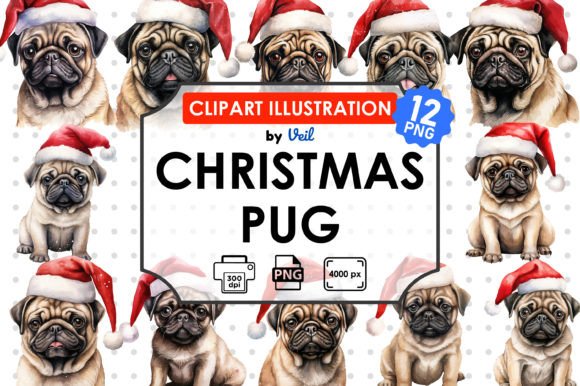
The first thing that strikes me about the Christmas Pug Clipart Sublimation is its undeniable charm. Pugs have a way of capturing attention with their expressive faces, and pairing that with holiday elements creates an instant emotional connection. The mood is playful yet cozy, perfectly suited for the winter season. Visually, the layout tends to be compact, which is a double-edged sword in embroidery. The shapes are generally bold enough to stand out, but the level of detail in the facial features and any accompanying text or accessories requires a careful eye.
For an Etsy seller or craft business owner, the visual personality of this design screams "giftability." It fits naturally into the niche of personalized pet lovers and holiday enthusiasts. However, because it originates as a sublimation clipart, my immediate concern is how well those gradients and soft edges will translate into satin stitch and fill stitch territories. Sublimation relies on ink bleeding slightly to create softness, whereas embroidery relies on precise thread placement. If the digitizer has done their job right, this design should retain its whimsical feel without losing definition.
Real-World Application: From Screen to Stitch
Let's talk about a concrete scenario. Imagine you are preparing a custom order for a client who wants a set of matching family sweatshirt embroidery pieces. They love pugs, and they want something festive but not overly traditional. This is where Christmas Pug Clipart Sublimation shines as a concept. When stitched onto a heather grey fleece or a soft cotton blend, the design adds a touch of humor and warmth.
I recently tested a similar workflow by adapting a graphic for a tote bag design. The goal was to create a sturdy, reusable holiday shopper bag. On a canvas tote, the texture of the fabric can sometimes fight against fine details. With this pug design, the key is ensuring the outline is strong enough to define the dog's silhouette against the weave of the canvas. If used as an applique design, where you layer fabric under the stitching, the result would be incredibly durable and visually striking, eliminating the need for dense fill stitches that might make the bag stiff.
For baby embroidery projects, such as a onesie or a burp cloth, the softness of the subject matter is perfect. However, the execution must be gentle. A heavy density of thread on a tiny baby garment can cause puckering and discomfort. In this case, using a lighter stitch density and perhaps incorporating more running stitch for internal details rather than solid fills would keep the finished product comfortable and high-quality.
Navigating Technical Challenges
While the aesthetic appeal is high, there are specific areas where you need to exercise caution. Not every surface is friendly to complex graphics. If you are planning to stitch this onto a curved surface like caps, you must consider the distortion. The pug's face, being the focal point, needs to remain symmetrical. On a structured cap, this is manageable, but on a softer, unstructured hat, the design might warp if the stabilizer isn't robust enough.
Another critical factor is fabric texture. On plush towels or thick blankets, small details like the eyes or a tiny Santa hat on the pug can get lost. The pile of the fabric swallows fine threads. For these items, I recommend scaling the design up slightly or simplifying the smallest elements. Similarly, on dark fabric, ensure that your thread colors have enough contrast. A dark brown pug on a navy blue sweatshirt might look muddy unless you use a light-colored outline or backing to make it pop.
Be wary of tiny lettering if the clipart includes phrases like "Happy Howlidays." In embroidery, anything under 0.25 inches can become illegible, especially after washing. If the original sublimation art relies on thin script, you may need to edit the embroidery file to thicken those strokes or remove the text entirely for smaller hoop applications.
Enhancing Brand Value and Customer Trust
Using a well-executed version of Christmas Pug Clipart Sublimation can significantly boost your handmade product value. Customers associate clean, crisp stitching with professionalism. If the stitches are uniform and the color transitions are smooth, it builds trust. Conversely, visible jump stitches or thread breaks can cheapen the perceived value of your small shop product.
For commercial embroidery projects, consistency is key. If you are selling these as part of a collection, ensure that every item uses the same tension settings and thread brands. This attention to detail helps in building a recognizable brand identity. Furthermore, creating high-quality printable mockup images of the stitched design for your online listings can drive buyer engagement. Show the texture of the thread; let the customer see that this is a premium physical item, not just a printed graphic.
Practical Notes for the Designer
Before you commit to a full production run, here are my top recommendations for working with this type of design:
- Test on Scrap Fabric: Always stitch a sample on the exact same material and weight you plan to use for the final product. This reveals issues with puckering or registration.
- Check Thread Contrast: Verify that your chosen thread palette works on both light and dark backgrounds. You might need two versions of the file with different outline colors.
- Review Stitch Density: High density can cause fabric distortion. If the design feels too stiff, reduce the fill density in your editing software.
- Confirm Hoop Size: Ensure the design fits comfortably within your available hoop size without needing excessive re-hooping, which can lead to alignment errors.
- Inspect Small Details: Zoom in on the digitized file. Are the eyes too close together? Is the nose too small to satin stitch? Adjust before stitching.
- Stabilizer Selection: Match your stabilizer to the fabric. Cut-away is often best for stretchy knits like sweatshirts, while tear-away works for stable wovens like tote bags.
- Licensing Check: Since this starts as a sublimation clipart, confirm the license terms. Can you sell the physical embroidered items? Can you sell the digitized file? Never assume; always verify to protect your craft business.
In conclusion, Christmas Pug Clipart Sublimation offers a delightful foundation for holiday projects, but its success lies in the translation from ink to thread. With careful attention to fabric choice, stabilization, and digitizing nuances, it can become a standout star in your holiday embroidery collection. Whether you are making a single personalized gift or stocking inventory for a boutique, taking the time to refine the technical execution will ensure your embroidery project delivers joy long after the holidays are over.