Reviewing Christmas Bell Clipart for Embroidery
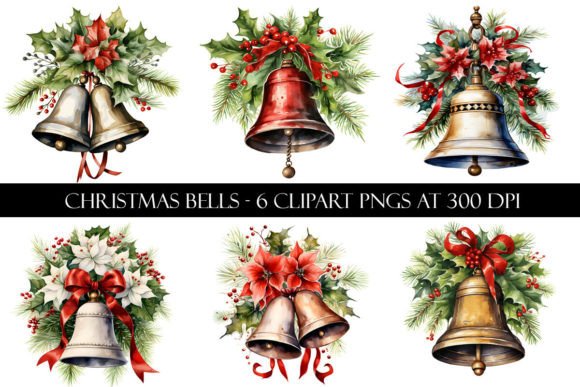
As a designer who has spent countless hours digitizing and stitching out holiday motifs, I approach every new Christmas Bell Clipart with a mix of excitement and skepticism. The holiday season is saturated with generic bells, jingle icons, and overused festive symbols. However, when I recently pulled up this specific set of Illustrations to evaluate for an upcoming client project, my initial reaction was one of relief. The lines were clean, the proportions felt balanced, and the visual weight suggested it could translate well from screen to fabric. But looking good on a monitor is only half the battle. The real test is how a design behaves under the needle.
First Impressions and Visual Personality
The first thing I noticed about this Christmas Bell Clipart was its versatility in mood. It avoids the overly cartoonish look that can sometimes cheapen a handmade product, yet it isn’t so rigid or realistic that it feels out of place on cozy winter wear. The shape is classic, evoking that immediate sense of nostalgia associated with holiday embroidery. For a designer, this is crucial. You want a motif that communicates "festive" instantly without needing excessive explanation or cluttered surrounding elements.
The layout of the clipart suggests a thoughtful approach to negative space. In embroidery, negative space is just as important as the stitched areas. If a design is too dense, the fabric puckers; if it’s too sparse, it looks unfinished. This particular design strikes a middle ground that hints at adaptability. Whether you are aiming for a minimalist aesthetic on a modern tote bag design or a more traditional look on a kitchen towel, the visual personality of these bells allows them to sit comfortably in various contexts.
Real-World Application: The Custom Sweatshirt Test
To truly understand the value of any digital embroidery file, you have to imagine it on a actual garment. I envisioned using this Christmas Bell Clipart for a custom order: a high-quality, heavyweight cotton sweatshirt for a boutique client. The goal was to create a personalized gift that felt elevated, not like a mass-produced item from a big-box store.
In this scenario, the bell would be placed slightly off-center on the left chest, a popular spot for sweatshirt embroidery. Because the design is part of a broader category of Illustrations, I had to consider how it would interact with text. Would it overpower a name? Would it get lost next to a monogram? I found that the bell’s silhouette is strong enough to stand alone as a small accent but detailed enough to hold its own when paired with simple, sans-serif lettering. This balance is vital for Etsy sellers and small shop products where customization is key. The design doesn’t fight for attention; it complements the personalization.
Performance on Different Fabrics
One of the biggest challenges in commercial embroidery is fabric variability. I mentally ran through how this Christmas Bell Clipart would perform on different materials. On a sturdy canvas tote, the design would likely stitch out cleanly with minimal stabilization issues. The structure of the bell provides natural anchor points for the stitches. However, on thinner fabrics like a silk pillow cover or a lightweight baby onesie, caution is required.
If you are working with stretchy or thin materials, the stitch density becomes a critical factor. While I don’t have the exact technical specs in front of me, visually, the design doesn’t appear overly saturated. This is a good sign. It suggests that with the right stabilizer—perhaps a cut-back for knits or a tear-away for wovens—the design should lay flat without causing significant distortion. For baby embroidery, where comfort is paramount, ensuring that the back of the stitching is smooth and not scratchy is essential. A design with fewer overlapping fill stitches and more strategic running stitches or satin stitch borders tends to perform better in these delicate applications.
Navigating Technical Challenges
No design is perfect for every situation, and honest review requires acknowledging where Christmas Bell Clipart might need careful handling. Small hoop sizes, such as 4x4 inches, are popular for quick gifts and patches. If you are scaling this design down for an embroidered patch or a cap, you must inspect the smallest details. Tiny curves and sharp corners can become problematic if the digitizing isn’t precise. I recommend zooming in to 400% on your screen to check for potential thread breaks or excessive jump stitches in the finer areas of the bell.
Additionally, consider the background. Dark fabrics require careful planning of thread colors. A red bell on a navy sweater might lack contrast unless you use a bright gold or white outline. Always test your color combinations. I often create black and white mockups to check the value contrast before threading up the machine. This simple step saves time and thread, ensuring that the final finished product has the visual pop you intend.
Practical Notes for Designers and Makers
For those looking to incorporate this Christmas Bell Clipart into their craft business, here are some practical steps to ensure success:
- Test on Scrap Fabric: Never stitch directly on your final garment. Use a similar fabric scrap to check tension and registration.
- Check Licensing: Before selling items made with this design, confirm the license terms. Some design assets allow commercial use for physical products but restrict digital resale.
- Stabilizer Selection: Match your stabilizer to your fabric. A heavy stabilizer on a light fabric can make the garment stiff and uncomfortable.
- Hoop Size Confirmation: Ensure the design fits within your available hoop size without needing excessive resizing, which can distort stitch angles.
- Thread Quality: Use high-quality polyester or rayon threads to achieve the sheen that makes holiday designs sparkle.
Enhancing Brand Consistency and Value
Ultimately, the choice of imagery affects your brand perception. Using high-quality, well-balanced Illustrations like this Christmas Bell Clipart signals professionalism. It shows customers that you care about the details. In the world of custom apparel and personalized gifts, trust is built on consistency. If your previous work was crisp and clean, a muddy or poorly stitched design can break that trust. This design, with its clear lines and classic theme, supports a brand image that is both festive and refined.
For digital product sellers, this clipart can also serve as a base for printable mockups. Showing how the design looks stitched on various items helps buyers visualize the end result, increasing conversion rates. Whether you are creating holiday gifts for family or inventory for a boutique branding launch, the versatility of this bell motif makes it a reliable addition to your library.
In conclusion, while every embroidery project has its unique variables, this Christmas Bell Clipart offers a solid foundation for festive creation. It respects the constraints of the medium while delivering on the aesthetic promises of the season. By paying attention to fabric choice, stabilization, and thread contrast, you can transform this digital asset into a tangible piece of art that delights recipients and enhances your portfolio.